Project Overview
This modeling study evaluates the building performance impact of ULTIMA TEMPLOK ceilings in a prototypical medium-sized office building located in Los Angeles, California. Two IESVE models were developed: a baseline model using standard mineral fiber ceilings and a proposed model with ULTIMA TEMPLOK tiles installed in perimeter zones.
TEMPLOK ceilings are acoustical tiles with an integrated Phase Change Material (PCM) layer that increases the ceiling’s effective thermal mass. The PCM absorbs heat during the day as it melts and releases heat at night as it re-freezes, passively moderating temperature swings. This buffering effect reduces HVAC system loads and enhances thermal comfort. TEMPLOK PCM is most active in the mid-70s °F range, where the bulk of its phase transition occurs.
TEMPLOK Ceiling Strategy
Los Angeles has many mild nights with lows in the 60s°F and warm days driving indoor temperatures into the mid-70s°F (Fig 1). This pattern is ideal for TEMPLOK, particularly when installed in zones with high internal or solar gains (Fig 2). By leveraging these diurnal swings, TEMPLOK absorbs heat to offset afternoon cooling loads and releases stored heat overnight to reduce morning warm-up demand.
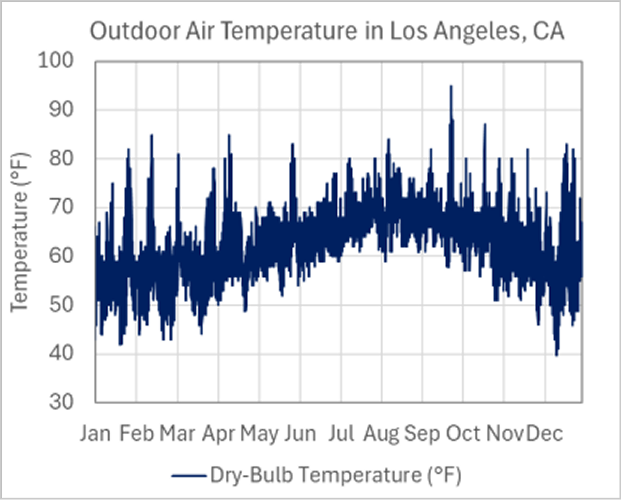
Fig 1: Typical dry-bulb temperatures in Los Angeles, CA, showing many cool nights below ~70°F that allow the PCM to naturally freeze.
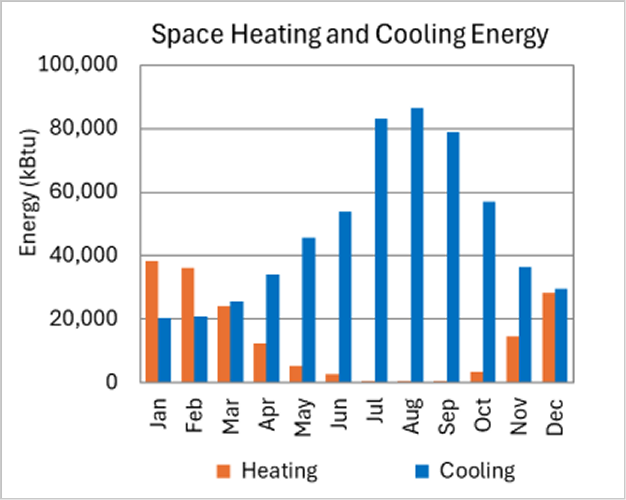
Fig 2: Monthly space heating and cooling energy in a prototypical office model, illustrating that most months require some heating and cooling that can be buffered down.
In this study, perimeter zones were prioritized for TEMPLOK application because they experience the largest solar-driven load variations and morning heating demand (Fig 3). A simulation of the baseline model confirmed that perimeter zones exhibited significantly greater daily heating and cooling load swings than interior zones (Fig 4).
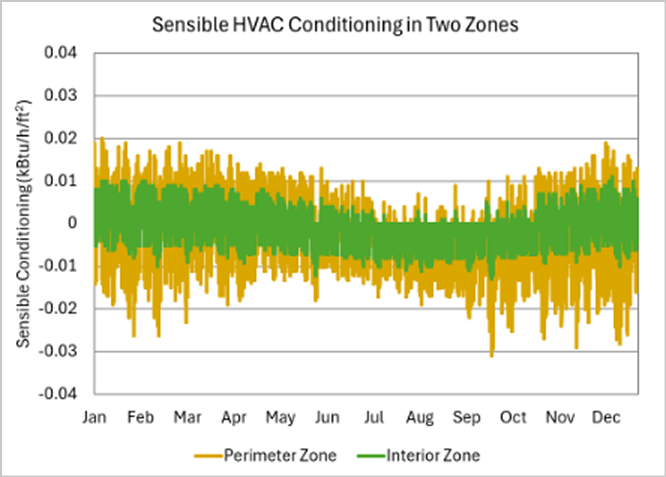
Fig 3: Sensible heating (positive) and cooling (negative) energy in perimeter vs. interior zones, showing larger daily swings in perimeter areas.
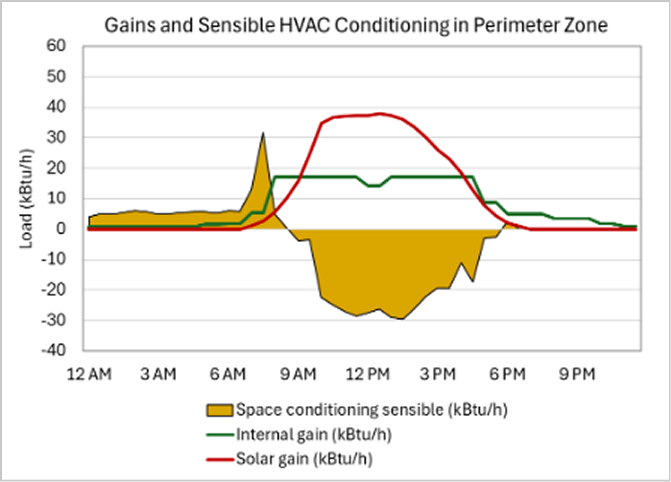
Fig 4: Typical fall day profile showing morning heating followed by afternoon cooling due to solar and internal gains in a perimeter zone.
Location: Los Angeles, CA
Climate Zone: IECC 3B (Warm-Dry)
Building Type: Medium Office (53,660 SF, 3 stories)
HVAC System: Packaged Terminal Air-Source Heat Pumps (DX cooling, electric heating)
Standards Referenced: ASHRAE 90.1 Appendix G
Coverage of TEMPLOK Ceilings: 75% of 21,870 SF perimeter zone ceilings
Simulation Tool: IES Virtual Environment (IESVE) 2025 with integrated TEMPLOK ceiling model
Results
11% More Comfortable Hours:
Gained 319 hours over the simulated year in a comfortable indoor temperature range (68-74°F)
8% Lower Peak Load:
Reduced the intensity of max cooling demand
4% Energy Savings:
Reduced the overall heating and cooling Energy Use Intensity (EUI)
Net-Carbon Negative:
Embodied carbon is paid back in just a few years via operational savings
ULTIMA TEMPLOK ceilings were applied to 75% of the perimeter-zone ceiling areas. The remaining 25% were modeled as standard ULTIMA tiles that can be cut around room edges and MEP fixtures. Overall, TEMPLOK panels covered 31% of the building’s conditioned area (Fig 5).
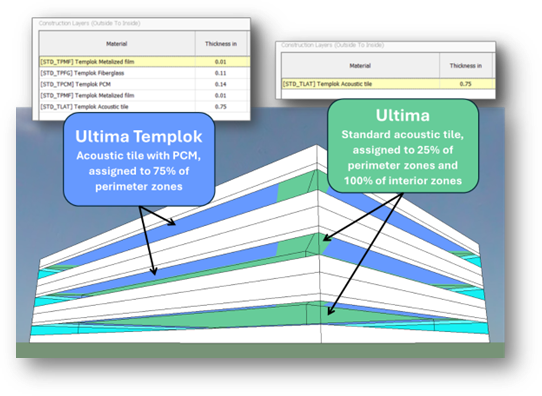
Fig 5: Model view in IESVE showing shaded regions where TEMPLOK and standard (ULTIMA) ceilings are assigned in the proposed model. The baseline model used standard ceilings for 100% of the ceiling area.
Results
Temperature Effects
Room-level results for a typical fall day show the PCM cycled between 62 °F and 78 °F, a wide range that exercised most of the PCM’s latent-heat storage capacity. The temperature difference between the PCM and the air indicates the PCM provided warmth in the early morning and cooling in the afternoon through passive heat exchange (Fig 6).
Analyzing the heating and cooling patterns between the TEMPLOK and standard ceiling simulations shows that TEMPLOK reduced morning warm-up and afternoon cooling demand while moderating overall room temperature variation (Fig 7).
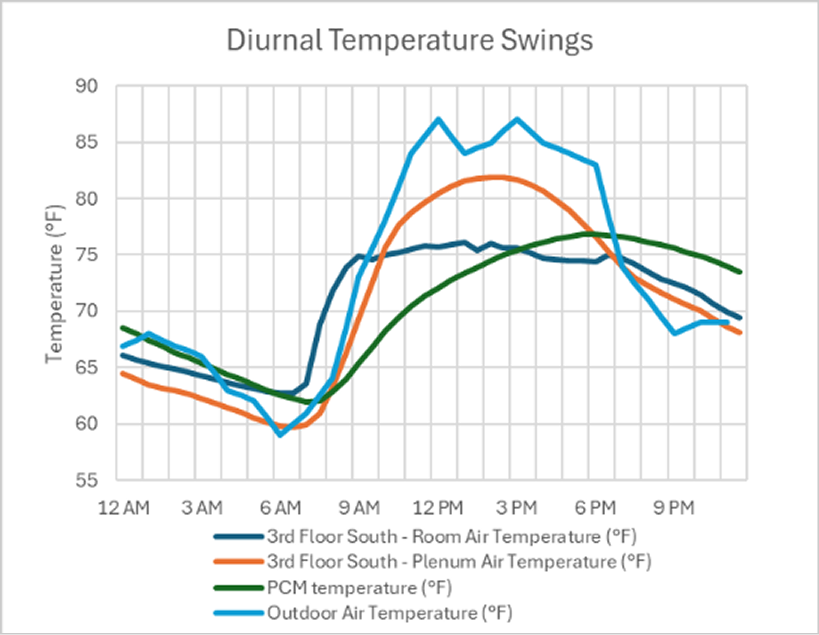
Fig 6: Diurnal air and PCM temperatures on a typical weekday (Sept 22), showing a large temperature swing and thermal lag exhibited by the PCM. Data from IESVE VistaPro after running the TEMPLOK case simulation.
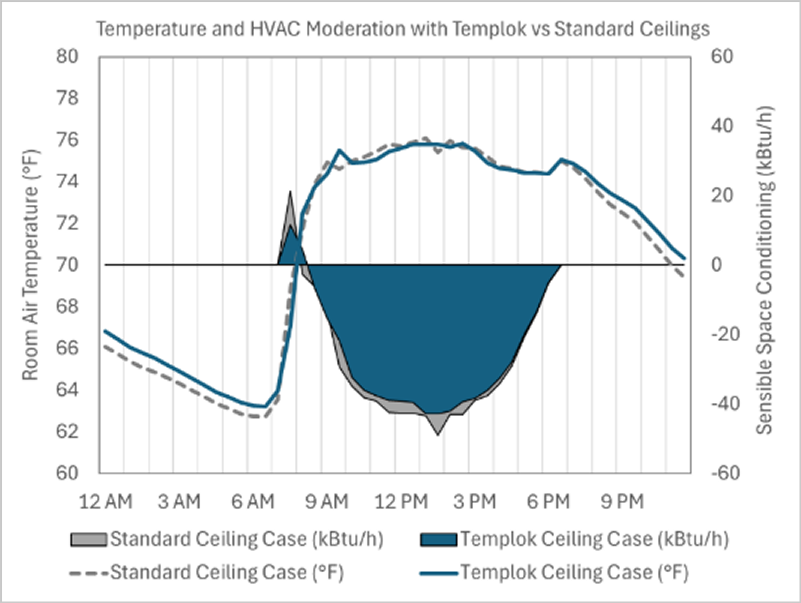
Fig 7: Room air temperature and sensible cooling load in a perimeter zone with TEMPLOK and standard ceilings, showing the load-moderating effects of TEMPLOK ceilings for both heating and cooling on Sept 22.
Annual Loads
Annual simulation results for perimeter zones indicated a 9% reduction in heating demand (Fig 8) and a 7% reduction in cooling demand (Fig 9), with consistent improvements throughout the year.
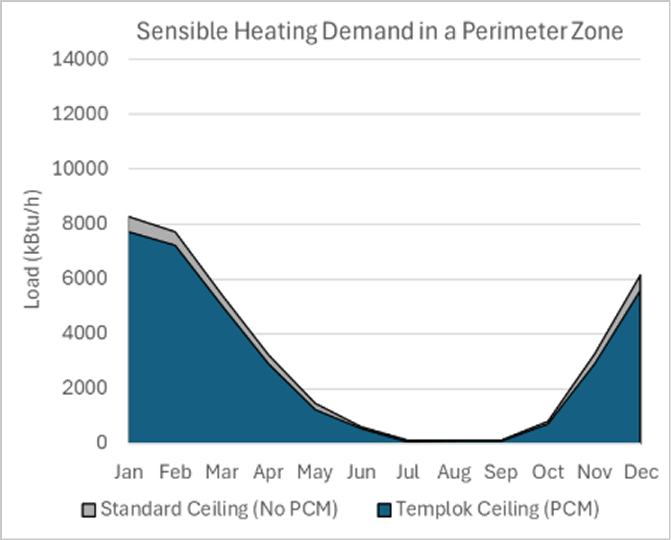
Fig 8: HVAC heating supplied to a perimeter zone in the TEMPLOK and standard ceiling simulation cases.
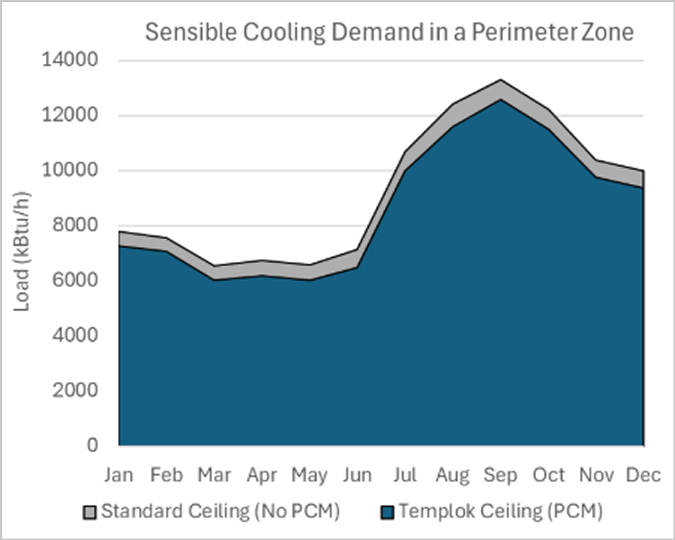
Fig 9: HVAC cooling supplied to a perimeter zone in the TEMPLOK and standard ceiling simulation cases.
The 15-minute peak sensible cooling load for the year was reduced by 8%, a measurable reduction in required equipment capacity for perimeter zones (Fig 10).
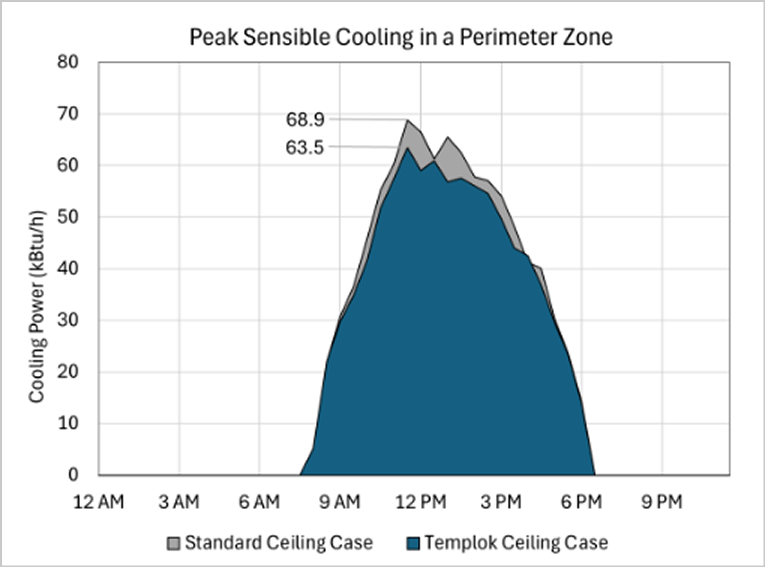
Fig 10: Cooling supplied by the HVAC system on the peak day (Sept 23) between TEMPLOK and standard ceiling simulation cases.
Although TEMPLOK was applied to only 31% of the conditioned building area, it reduced total heating energy use by 3.1% and cooling energy by 2.1%, a meaningful reduction from a simple ceiling-tile upgrade. On a unit basis, annual savings were 0.17 kWh/SF of TEMPLOK, or roughly $0.10/SF, based on fixed utility rates of $0.24/kWh and $15/kW demand charge assumptions.
Carbon
Compared to conventional thermal mass, TEMPLOK provides comparable heat-storage capacity with only a fraction of the material use. The ¼-inch PCM layer in TEMPLOK provides the equivalent storage as several inches of concrete, with less than a quarter of the embodied carbon footprint.
In this simulation, operational carbon savings from reduced HVAC energy offset the embodied carbon of TEMPLOK within just a few years. Beyond that point, the ceiling continues to deliver net-carbon benefits over its 20+ year lifespan, making it a carbon-negative alternative to conventional ceiling systems.
Thermal Resilience
The thermal mass of TEMPLOK also enhances building resilience and passive survivability during power or HVAC outages. In a simulated summer outage scenario, spaces with TEMPLOK ceilings remained approximately 2 °F cooler than those with standard ceilings, consistent with results from controlled test-room experiments and classroom field studies conducted in Southern California (Fig 11).
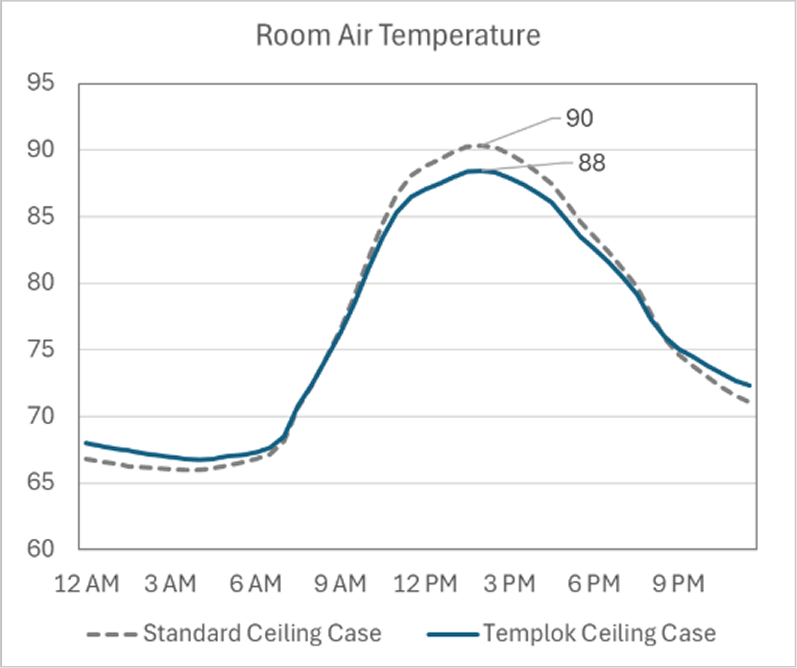
Fig 11: Room air temperature moderated by TEMPLOK in a simulated HVAC outage event on Aug 11.
Los Angeles’ diurnal temperature swings allow the PCM layer to recharge naturally overnight, refreezing and storing cooling capacity for the next day. This latent storage slows the rate of indoor temperature rise during heat waves or system outages, improving occupant comfort and extending the safe-temperature window.
Conclusion
This study demonstrates how TEMPLOK ceilings can measurably improve energy performance and sustainability in Southern California perimeter building zones. In the Los Angeles model, TEMPLOK reduced annual perimeter-zone heating and cooling loads by 7-9% and peak sensible cooling load by 8%.
At this level of performance, the TEMPLOK ceiling upgrade pays back quickly, and sometimes immediately when tax incentives are included. Buildings with time-of-use or high demand rates benefit further, as TEMPLOK shifts thermal load away from peak periods. In non-perimeter zones, pairing TEMPLOK ceilings with night purge ventilation can further boost performance by helping the PCM fully reset.
TEMPLOK installs like standard ceiling tiles with identical finishes and acoustic performance, offering a simple, no-tradeoff path to better building efficiency and resilience. Its phase-change layer is especially effective in Southwest climates with large day-night temperature swings that allow daily PCM cycling.
Overall, TEMPLOK ceilings provide a cost-effective, passive upgrade to the indoor environment for better building performance and occupant experience without tradeoffs.