Summary:
Three classrooms at Palm Springs Unified School District were retrofitted with TEMPLOK Energy Saving Ceilings. The installation was completed over a weekend with no disruption to classes and the classrooms were monitored for temperature and cooling energy use. Compared to rooms with standard ceiling panels, TEMPLOK ceilings significantly improved comfort and cooling efficiency. These results demonstrate the value of TEMPLOK ceilings as a simple, passive upgrade to acoustic ceiling tiles in environments with temperature swings, enhancing aesthetics, acoustics, and overall comfort in learning spaces.

The Challenge:
Portable classrooms in Palm Springs, CA, struggled to maintain comfortable temperatures through the hottest months of the school year. The lightweight buildings experienced huge temperature swings in the desert climate. Afternoons often became uncomfortably warm as the HVAC units ran at full capacity and struggled to maintain the setpoint (Fig 1). While the district planned for more permanent buildings, they needed a low disruption retrofit that would improve comfort in their portable buildings and improve operational efficiency.
Hourly Temperature and HVAC Energy Differences with Standard Ceilings
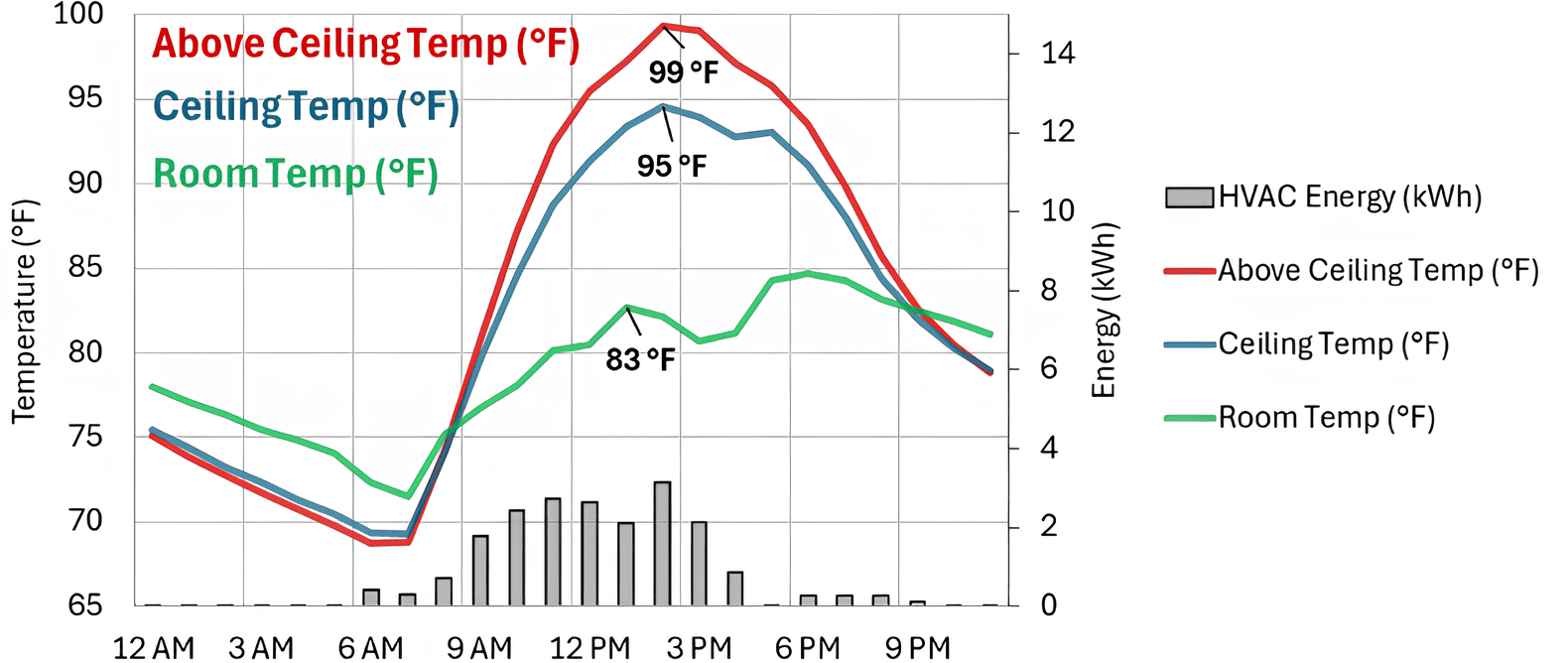
Fig 1: Average hourly temperatures and HVAC energy over a school week in a classroom with standard ceilings (May 5 - May 9)
The Solution:
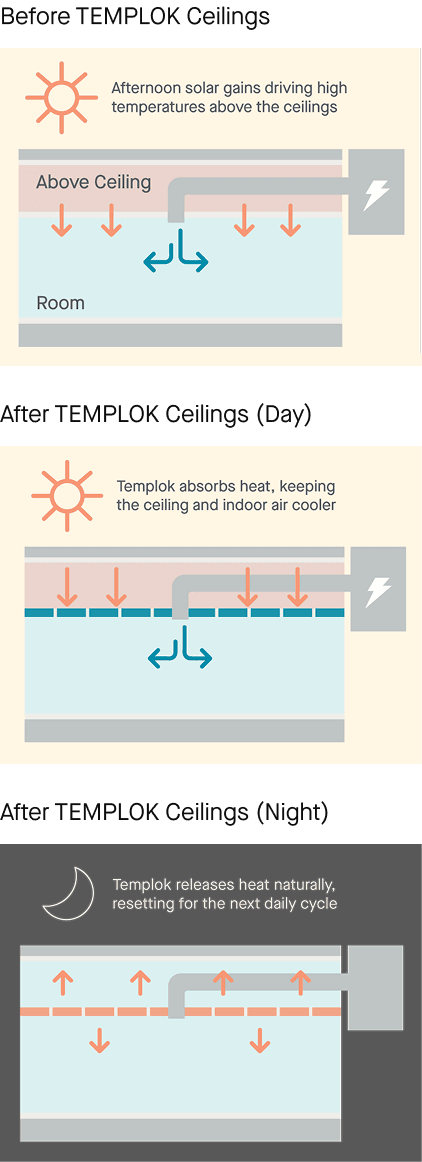
To take advantage of the large day-night temperature swings of the desert climate, TEMPLOK ceiling tiles containing Phase Change Material (PCM) were installed to add thermal mass inside the buildings. Positioned between the hot roof and the occupied space, the TEMPLOK ceiling acts as a thermal buffer, absorbing heat from above rather than passing it through the ceiling. The PCM inside the ceiling melts as temperatures rise throughout the day, and naturally refreezes overnight as temperatures fall, resetting for the next daily cycle.
Improved Thermal Comfort: TEMPLOK kept the classrooms 1-4°F cooler on average during school hours compared to untreated rooms. This created a more stable, comfortable learning environment during the hottest hours of the day.
Afternoon HVAC Demand Shaved: The most significant energy reduction also occurred during the hottest afternoon hours (12 PM – 3 PM), when solar gain is highest. The TEMPLOK ceilings shaved HVAC energy demand by up to 20% during these hours, according to a multivariate analysis of the entire study period.
Energy Savings: In addition to keeping the temperature cooler, each classroom with TEMPLOK ceilings also used less energy. TEMPLOK reduced total HVAC energy consumption by 7% across the study period.
These benefits are shown by directly comparing indoor temperatures and energy use in neighboring classrooms with and without TEMPLOK ceilings, averaged over the same week (Fig 2).
Hourly Temperature and HVAC Energy Differences with TEMPLOK Ceilings
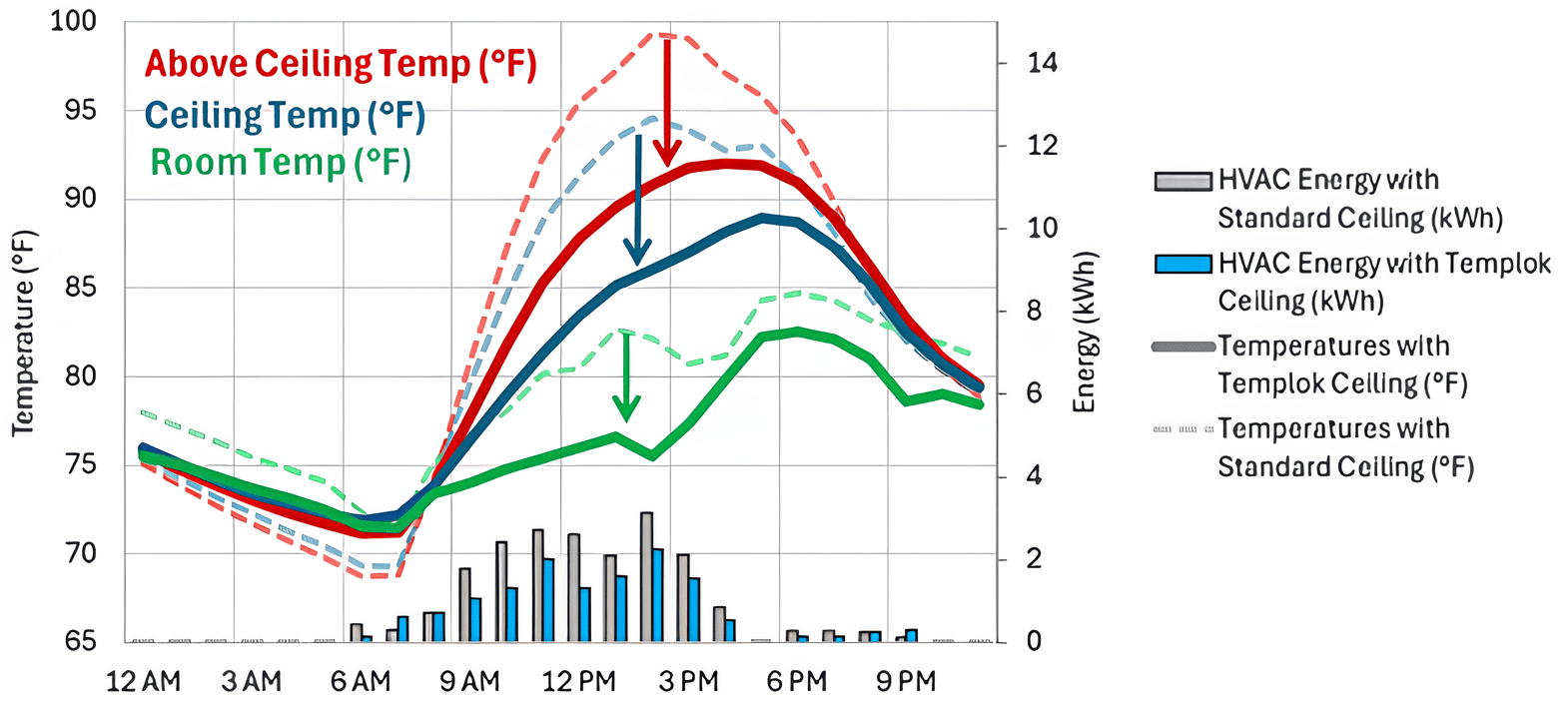
Fig 2: Average hourly temperatures and HVAC energy over a school week in classrooms with standard and Templok ceilings (May 5 - May 9)
Project: Palm Springs Unified School District
Building Type: Portable Classroom (656 SF per Classroom)
Location: Palm Springs, CA
Climate: Zone 3B Dry, Diurnal
Application:
• Portable classrooms
• Lightweight construction
• Desert climate
• Large temperature swings experienced inside
Retrofit:
• TEMPLOK ceiling tiles installed, covering 71% of three 656 SF classrooms
Approach:
• Use the thermal mass of TEMPLOK ceilings to passively moderate the daily temperature swing
Analysis:
• Field measurement of temperature and energy impacts (April - June)
• Calibrated energy model