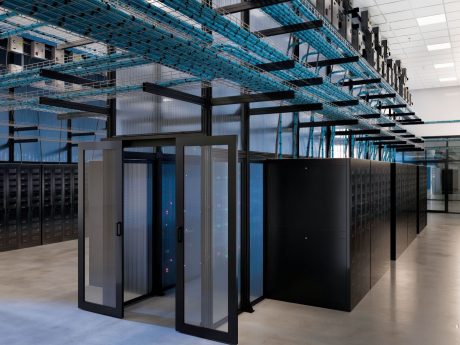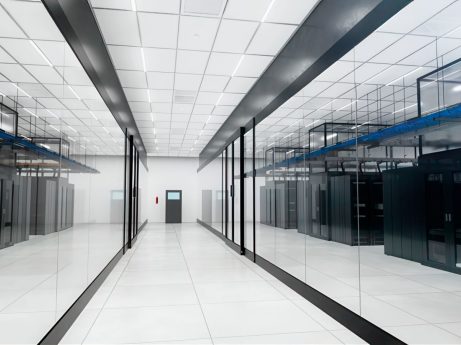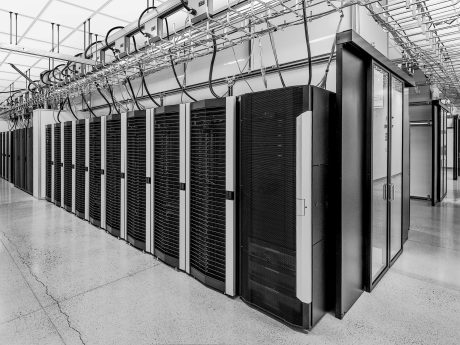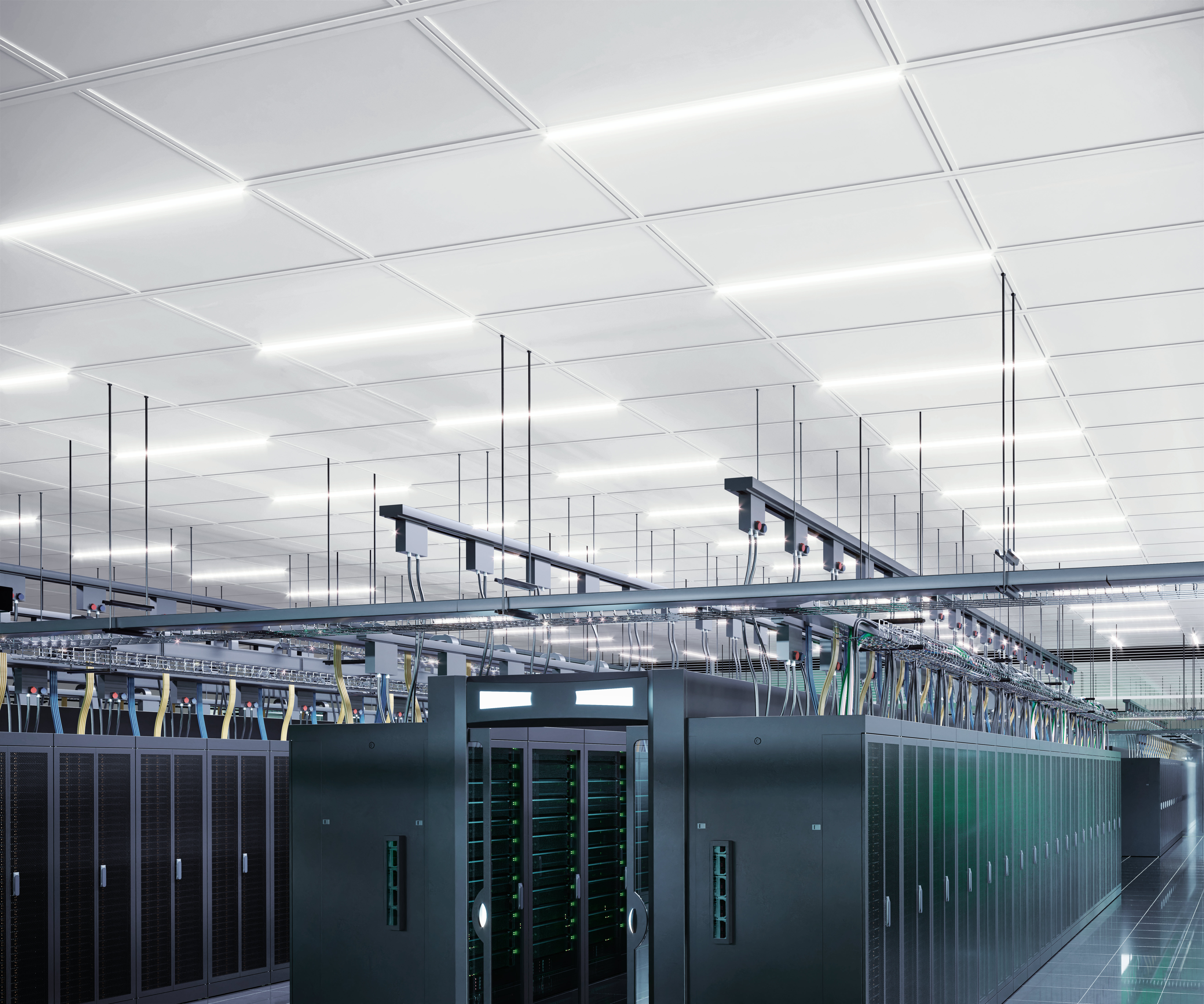
Load capacity, equipment support, and safety are all priorities when it comes to a data center’s structural grid system. Often treated as a background component, these systems are the load-carrying component for equipment such as cable trays, busbars, containment systems, and lighting. Behind the scenes of the grid system is a complex engineering process, one that combines design principles with rigorous testing to ensure structural integrity and data center reliability.
That’s why understanding how load data is reported, particularly around deflection and point load performance, is essential when evaluating structural ceiling systems.
Understanding Load Types: Area vs. Point
Structural ceilings are often rated in one of two ways: uniform area loads (e.g., pounds per square foot) or point loads (a load applied in one spot). While uniform load ratings may work for floor systems, they may not be ideal for data center ceilings. In real-world installations, weight is concentrated at specific locations, such as cable tray or containment system attachment locations, making point load data more accurate and relevant. Describing the loading over an area (pounds per square foot) may not fully reflect the load in ceiling applications that aren’t evenly distributed. Point load data should always be requested to know the system’s loading capacity.
Why Deflection Limits Like L/360 Are Important to Understand
Deflection criteria defines how much a structural member bends under load. A common criteria is L/360, meaning the beam can deflect no more than 1/360th of its span, which on a 48-inch span equates to about an eighth of an inch. This criteria is often used in structural grid systems as a conservative threshold to ensure visual alignment and structural integrity.
Using L/360 as a deflection limit offers a higher safety margin versus L/240 or L/180, which allow more bending and can result in visible sag under concentrated loads. Selecting systems tested to L/360 can help achieve better ceiling aesthetics and ensure safe performance.
Load Testing Procedures
Structural ceiling systems typically evaluate deflection using universal test machines that apply force to beams and measure both load capacity and deflection thresholds. This process replicates real-world conditions to ensure every design element performs as specified, giving project teams confidence that published data reflects actual field performance.
Tests conducted include:
Threaded fastener torque testing to ensure installers can achieve proper tightness without over- or under-tightening
Flexural capacity testing confirms the way beams will respond to weight and deflection.
Pullout and shear capacity testing shows how bolts and fasteners perform under vertical and lateral forces
Isolated connection testing subjects brackets and connectors to failure to identify their limits
Fully-assembled system testing evaluates how the complete grid behaves when loaded
Testing the fully assembled system is especially important, as it is during this stage that real-world scenarios can be observed and addressed.
The Armstrong Approach to Reporting
Armstrong reports point load values at multiple deflection thresholds, including L/360, to help customers make informed decisions. This includes both individual component testing and full-system evaluations. Armstrong also participates in efforts led by CISCA (Ceilings & Interior Systems Construction Association) to help shape standardized testing methods across the industry.
Until a universal standard is adopted, it's essential to evaluate published data carefully, prioritize point load values over area loads, and ask for deflection-based reporting. This level of detail ensures customers can select grid systems that not only meet project requirements but also support long-term operational reliability, airflow management, and safety -– all of which are critical in today’s high-density data centers.
Design your data center ceiling needs with our performance-tested products. Contact the Armstrong team to chat.